Your CBD Gummies Aren't Underperforming — Your Gut Might Be
When the Gummy Isn't the Problem
Let's say you've been taking a quality CBD gummy every day for a couple of months. You chose it carefully, you're consistent, and you did everything right. But your mood still feels flat. Your energy still crashes by 2 PM. The calm you were hoping for never quite showed up.
Before you write off CBD entirely, there's a question worth asking: what's going on in your gut?
It sounds like a strange detour, but the connection between your gut microbiome, your mood, your energy levels, and the efficacy of what you put in your body is one of the most significant — and most underreported — stories in modern wellness science. And if you're not paying attention to it, you may be leaving a lot of potential results on the table.
The Gut-Brain Axis: A Quick Orientation
Your gut and your brain are in constant conversation through a network researchers call the gut-brain axis. This isn't a metaphor — it's a literal bidirectional communication highway involving the vagus nerve, immune signals, and a staggering array of neurotransmitters, many of which are produced in the gut itself.
About 90 to 95 percent of your body's serotonin — yes, that serotonin, the one associated with mood stability and wellbeing — is manufactured in your gastrointestinal tract. The trillions of bacteria living in your gut play a direct role in that production process. When your microbiome is diverse and balanced, serotonin synthesis tends to run smoothly. When it's disrupted — by stress, antibiotics, a poor diet, or chronic inflammation — that production can falter in ways that show up as low mood, brain fog, and exhaustion.
Now layer CBD on top of that system. CBD interacts with the endocannabinoid system, which has receptors distributed throughout the body, including densely in the gastrointestinal tract. Emerging research suggests that the ECS plays a role in regulating gut motility, intestinal inflammation, and the gut-brain signaling that influences mood and stress response. In other words, CBD and your gut are working in the same neighborhood — and if that neighborhood is in disarray, it affects what CBD can actually do.
What a Disrupted Microbiome Actually Looks Like
Microbiome imbalance — sometimes called dysbiosis — doesn't always announce itself with dramatic symptoms. Sometimes it's subtle, showing up as:
- Inconsistent energy throughout the day, with pronounced afternoon crashes
- Mild but persistent low mood or irritability that doesn't have an obvious cause
- Digestive irregularity (bloating, unpredictable digestion, sluggishness after eating)
- A sense that nothing is working, supplements included
- Poor sleep quality even when sleep duration seems adequate
- Heightened anxiety or an exaggerated stress response
If several of those sound familiar, your gut health deserves a closer look before you adjust your CBD protocol.
The Pre-Assessment Checklist
Before making any changes, run through this honest self-assessment:
Diet audit:
- How many different plant foods do you eat in a typical week? (Research suggests 30+ varieties weekly is associated with significantly greater microbiome diversity)
- Are fermented foods — yogurt, kefir, kimchi, sauerkraut, kombucha — a regular part of your eating?
- How much ultra-processed food, refined sugar, and alcohol are you consuming? These are among the most reliably documented disruptors of gut bacterial balance.
Stress and sleep audit:
- Chronic stress elevates cortisol, which has a direct and well-documented negative effect on gut barrier integrity and microbial diversity
- Poor sleep compounds this — the gut microbiome and circadian rhythm are closely linked, and disrupted sleep patterns alter bacterial composition
Medication history:
- Recent or frequent antibiotic use is one of the most significant short-term disruptors of microbiome balance
- Proton pump inhibitors (common acid reflux medications) have also been associated with microbiome changes
Dietary Adjustments That Can Amplify What You're Already Taking
The goal here isn't a complete dietary overhaul. It's targeted, practical shifts that support the gut environment your CBD needs to work in.
Add prebiotic foods. Prebiotics are the fibers that feed your beneficial gut bacteria. Garlic, onions, leeks, asparagus, bananas, and oats are all solid, accessible sources. You don't need a supplement — you need consistency with real food.
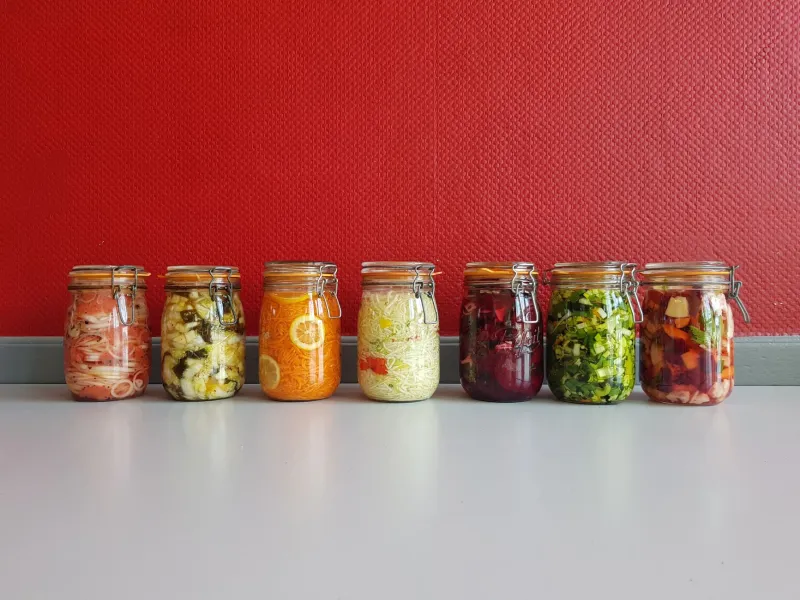
Introduce fermented foods gradually. If you're not used to fermented foods, go slow. Adding a small serving of plain yogurt with live cultures, or a few forkfuls of sauerkraut, a few times a week is a reasonable starting point. Going too hard too fast can cause temporary digestive discomfort as your microbiome adjusts.
Cut back on the gut disruptors. Artificial sweeteners (particularly sucralose and saccharin), excessive alcohol, and highly processed snack foods have all shown associations with reduced microbial diversity in research studies. You don't have to eliminate them — just be honest about how much they're featuring in your daily life.
Consider omega-3s. Fatty fish, walnuts, and flaxseed — or a quality fish oil supplement — have anti-inflammatory properties that support gut barrier function and have been studied in relation to mood improvement. This is a case where your supplement stack can genuinely work together.
How This Connects Back to Your CBD
When you take a CBD gummy, it enters your digestive system and begins interacting with the ECS receptors that line your gut before it ever reaches your bloodstream. A healthier gut environment means better absorption, less systemic inflammation competing with CBD's effects, and a more responsive ECS overall.
More practically: if your gut-brain axis is compromised, the mood and energy benefits you're hoping CBD will deliver are fighting an uphill battle. Serotonin production is impaired. Inflammation is elevated. Your nervous system is already running hot. CBD can still help — but it's working harder for less return.
Support the system it's working in, and you may find that the gummy you've been taking all along suddenly starts delivering on what you bought it for.
The Trifecta in Practice
Gut health, mood stability, and sustained energy aren't three separate problems requiring three separate solutions. They're deeply interconnected outputs of the same underlying system. CBD, at its best, is a tool for supporting that system — but it works best when the foundation is solid.
Start with the checklist. Make one or two dietary shifts. Give it three to four weeks. Then reassess how your CBD is landing. You might be surprised by what was missing all along.